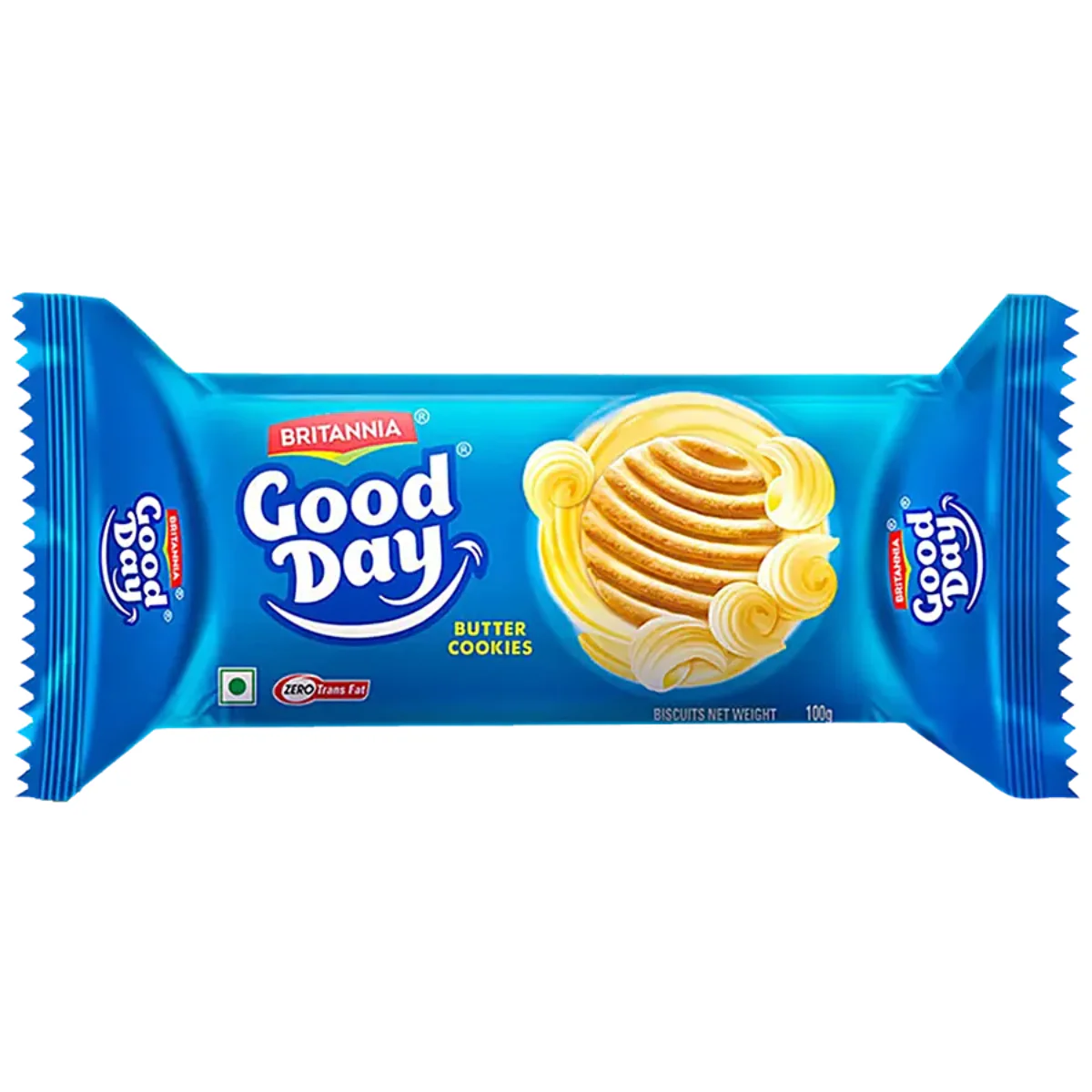
Britannia Good Day Butter Biscuit
Red flags
- −Red flag: High added sugar (19.8g per 100g)
- −Red flag: High saturated fat (10.9g)
- −Red flag: Refined flour (maida) base
- −Red flag: Palm oil listed
Green flags
- +Green flag: Source of protein (6.8g)
Ingredients, decoded
9 listed- Refined wheat flour (Maida)
- Refined palm oil
- Sugar
- Invert sugar syrup
- Milk products (Milk solids & Butter (5%))
- Raising agents (INS 500(ii), INS 503(ii))
- Iodised salt
- Artificial butter flavour
- Milk & Vanilla
CC2
Our take
CleanPlate reviewThe butter cookie, and what the butter actually is
Good Day is the tea-time default in countless Indian homes: the biscuit you offer guests and reach for without thinking. The name and the pack both lead with butter, so that is where we started reading.
CleanPlate scores it [L]CC2. The C for nutrition reflects a calorie-dense biscuit with little protein and no declared fibre. The C for ingredients and label reflects a maida and palm oil base, artificial flavouring, and a "butter" name that the butter content doesn't fully back up. The 2 for risk is better than you might expect, because sodium is low and there is no trans fat, but the sugar and saturated fat are real.
Claims vs reality
What the pack says, checked against the ingredient list and nutrition panel.
- Product nameMisleading
“Butter Biscuit”
The label gives 5% for milk solids and butter together, so butter is less than that, and an artificial butter flavour tops up the taste.
How CC2 breaks down
Each grade is scored on its own. Here are the label numbers behind each one, per 100 g.
Adequate nutrient density
- Protein
- 6.8 g
- Fibre
- Not declared
- Vitamins and minerals
- None declared
- Energy
- 500 kcal
Scored on eight nutrients (protein, fibre, calcium, iron, vitamins A, C, D and zinc), per 100 g and per 100 kcal.
Mixed processing and additives
- Base
- Refined wheat flour
- Main fat
- Refined palm oil
- Sweeteners
- Sugar, Invert sugar syrup
- Additives
- 3
- Flagged
- Maida, Palm oil
- Artificial flavour or colour
- Yes
Scored on six things: base processing, fat quality, sweeteners, additives, colours and flavours.
Low risk
- Added sugar
- 19.8 g
- Sodium
- 223 mg
- Saturated fat
- 10.9 g
- Trans fat
- 0 g
Scored on added sugar, sodium and saturated fat, with a penalty for trans fat.
[L] The name or pack claims promise more than the ingredient list delivers. See Claims vs reality.
A closer look
Does the label add up?
The front of the pack says "Butter Cookies" and "Zero Trans Fat". Both are technically true. Trans fat is declared at 0 g, and butter is genuinely in the recipe. But the main fat is refined palm oil, which is why the biscuit carries 10.9 g of saturated fat per 100 g.
The label does not claim the biscuit is healthy, and it does not hide its additives. It uses only raising agents (baking soda type compounds), with no synthetic colours or chemical preservatives.
Ingredients to watch
- Refined palm oilWorth watching
The second ingredient and the main fat. Palm oil is about half saturated fat, which drives the 10.9 g of saturated fat per 100 g.
- Sugar and invert sugar syrupWorth watching
Two forms of sugar, adding up to 19.8 g of added sugar per 100 g. That is high by FSSAI's standards for a solid food.
- Artificial butter flavourWorth watching
Much of the buttery taste comes from flavouring rather than butter. Not a safety issue, but a gap between the name and the recipe.
- Refined wheat flour (maida)Worth watching
The first ingredient. Low in fibre, and the reason a few biscuits do not keep you full for long.
Common misconceptions
Myth: "It says butter, so it is a quality biscuit"
Butter is 5 percent of the recipe. The base is maida, the main fat is palm oil, and an artificial butter flavour does a lot of the work. It is a pleasant biscuit, not a premium one.
Myth: "Zero trans fat means the fats are fine"
No trans fat is genuinely good. It does not make the biscuit low in saturated fat: at 10.9 g per 100 g, the saturated fat is high.
Myth: "Two or three biscuits is nothing"
Good Day is 500 kcal per 100 g. A few biscuits with chai is fine; the issue is how easily a few becomes half a pack, several times a week.
How often, and how
- Healthy adultsTwo biscuits with tea, a few times a week
- ChildrenAn occasional treat, not a daily tiffin filler
- Diabetes or PCOSRarely, and alongside protein or nuts
Smarter ways to eat it
The classic, done right
Two biscuits with a cup of chai. This is exactly what Good Day is for, at a quantity that does not overshoot.
Stretch it with nuts
Break one biscuit into a handful of roasted chana, peanuts or almonds. You still get the sweetness, with protein and fibre doing the filling.
Common questions
Is Britannia Good Day Butter Biscuit healthy?
Britannia Good Day Butter Biscuit scores CC2 (Good) on CleanPlate, which makes it a reasonable choice with a trade-off or two worth knowing about. The main concerns are: High added sugar (19.8g per 100g); High saturated fat (10.9g); Refined flour (maida) base; Palm oil listed. On the plus side: Source of protein (6.8g).
What does the CC2 score mean?
The first letter (C) grades nutritional value: adequate nutrient density. The second letter (C) grades ingredient and label integrity: mixed processing and additives. The number (2) grades risk nutrients (sugar, sodium, saturated fat): low risk.
Which ingredients in Britannia Good Day Butter Biscuit should I watch?
Refined wheat flour (Maida) (Maida), Refined palm oil (Palm oil).
Last reviewed September 26, 2026. Scored with the CleanPlate method from the published label.
More Biscuits & Cookies
All 10 →- CB4Britannia NutriChoice Digestive High-Fibre Biscuit
- −Red flag: High added sugar (12.1g per 100g)
- −Red flag: High saturated fat (10.3g)
Fair - [F]CC4Britannia Milk Bikis Milky Sandwich Creme BiscuitsFortified
- −Red flag: High added sugar (27.7g per 100ml)
- −Red flag: High saturated fat (12.9g)
Fair - DC3Parle Monaco Cheeslings Classic Biscuit
- −Red flag: High saturated fat (9.6g)
- −Red flag: Palm oil listed
Fair - CD4Britannia Treat Jim Jam Sandwich Crème Biscuits
- −Red flag: Contains Carmoisine
- −Red flag: High added sugar (31.9g per 100g)
Poor