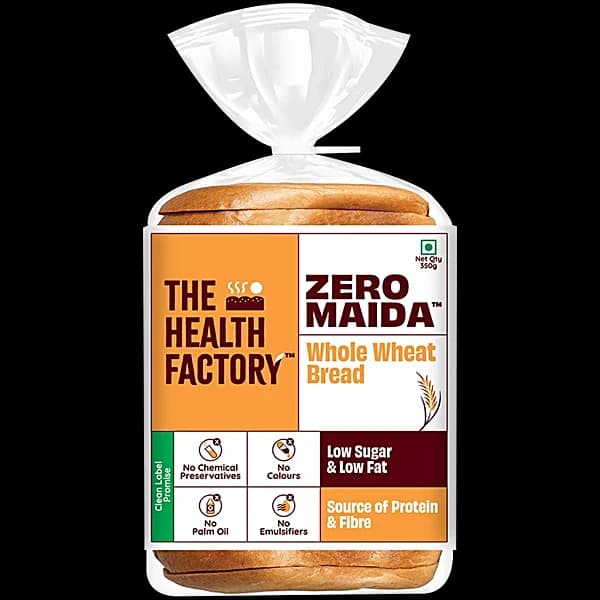
Zero Maida Whole Wheat Bread
Red flags
No major red flags on the label.
Green flags
- +Green flag: High protein (13.5g per 100g)
- +Green flag: High fibre (6.3g)
- +Green flag: No additives
Ingredients, decoded
8 listed- Chakki Fresh Atta (Whole Wheat Flour)
- Yeast
- Wheat Gluten
- Rice Bran Oil (Edible Vegetable Oil)
- Cane Sugar
- Iodised Salt
- Cultured Wheat Flour
- Cultured Glucose
CA2
Our take
CleanPlate reviewA bread whose front of pack tells the truth
The bread aisle is full of loaves that call themselves brown, multigrain or wholesome while being mostly maida. The Health Factory's Zero Maida loaf makes a long list of promises on its front, so we checked every one against the back.
CleanPlate scores it CA2. The A for ingredients is the headline: eight recognisable ingredients, whole wheat atta first, no palm oil and no additives. The C for nutrition may surprise you given the protein and fibre on the pack, and the reason is worth understanding. The 2 for risk reflects very little sugar or fat, with moderate sodium.
Claims vs reality
What the pack says, checked against the ingredient list and nutrition panel.
- Product nameHolds
“Zero Maida”
No maida is listed; chakki atta is the first ingredient.
How CA2 breaks down
Each grade is scored on its own. Here are the label numbers behind each one, per 100 g.
Adequate nutrient density
- Protein
- 13.5 g
- Fibre
- 6.3 g
- Vitamins and minerals
- None declared
- Energy
- 241 kcal
Scored on eight nutrients (protein, fibre, calcium, iron, vitamins A, C, D and zinc), per 100 g and per 100 kcal.
Clean, minimally processed
- Base
- Chakki Fresh Atta
- Main fat
- Rice Bran Oil
- Sweeteners
- Cane Sugar, Cultured Glucose
- Additives
- 0
- Flagged
- None
Scored on six things: base processing, fat quality, sweeteners, additives, colours and flavours.
Low risk
- Added sugar
- 1.9 g
- Sodium
- 347.1 mg
- Saturated fat
- 0.14 g
- Trans fat
- 0 g
Scored on added sugar, sodium and saturated fat, with a penalty for trans fat.
A closer look
Does the label add up?
"Zero Maida" is true: the flour is chakki fresh atta (whole wheat). "No palm oil" is true: the fat is rice bran oil. "No emulsifiers" and "No colours" are true. "Low sugar & low fat" meet FSSAI's thresholds. "Source of protein & fibre" is, if anything, modest: fibre at 6.3 g per 100 g qualifies as high.
"No chemical preservatives" is also true, and the label shows how: cultured wheat flour and cultured glucose are fermented ingredients that slow mould naturally. It is a clean-label approach rather than no preservation at all.
Ingredients to watch
- SodiumWorth watching
347 mg per 100 g. Moderate for bread, and the main thing to keep in mind if you eat several slices a day alongside salty fillings.
- Added wheat glutenFine
Part of the 13.5 g of protein per 100 g comes from added wheat gluten rather than the atta alone. It is wheat protein, which our method counts at half value compared with dairy or eggs. Not a concern, just context for the protein number.
- Cane sugarFine
A small amount to feed the yeast. Added sugar is 1.9 g per 100 g, which is low.
Common misconceptions
Myth: "With 13 g of protein, it must score top marks for nutrition"
Protein is good, but it is wheat protein, which our method counts at half value, and the label declares no vitamins or minerals for us to credit. That is why nutrition lands at C even though the ingredients earn an A.
Myth: "No preservatives means it will spoil in a day"
Cultured wheat flour and cultured glucose help it keep for a few days. Refrigerate it or freeze half the loaf if you are a slow eater.
Myth: "Brown bread is always whole wheat"
Not at all. Many brown breads are maida with colour. This one really is whole wheat, which is why reading the ingredient list beats trusting the colour.
How often, and how
- Healthy adultsA reasonable everyday bread
- ChildrenA good default for sandwiches and toast
- Diabetes or PCOSBetter than most breads; still pair with protein
Smarter ways to eat it
Protein on toast
Two slices with egg bhurji or paneer bhurji. The bread brings fibre, the filling brings complete protein, and together they keep you full.
A better sandwich
Hung curd, cucumber, tomato and a little chaat masala. Skip the processed cheese slices and the sandwich stays as clean as the bread.
Common questions
Is Zero Maida Whole Wheat Bread healthy?
Zero Maida Whole Wheat Bread scores CA2 (Good) on CleanPlate, which makes it a reasonable choice with a trade-off or two worth knowing about. We found no major red flags on its label. On the plus side: High protein (13.5g per 100g); High fibre (6.3g); No additives.
What does the CA2 score mean?
The first letter (C) grades nutritional value: adequate nutrient density. The second letter (A) grades ingredient and label integrity: clean, minimally processed. The number (2) grades risk nutrients (sugar, sodium, saturated fat): low risk.
Last reviewed 2026-06-19. Scored with the CleanPlate method from the published label.
More Breads & Bakery
All 15 →- CA2Naturbaked Whole Wheat Bread
- +Green flag: Source of protein (7.7g)
- +Green flag: Source of fibre
Good - BB2Protein Chef Multigrain Double Protein Bread
- +Green flag: High protein (23.7g per 100g)
- +Green flag: High fibre (11.5g)
Good - CB2Britannia Multigrain Bread
- −Red flag: Palm oil listed
- −Red flag: Contains Calcium Propionate
Good - CB2English Oven Brown Bread
- −Red flag: Refined flour (maida) base
- −Red flag: Contains Calcium Propionate
Good