Maggi 2-Minute Masala Instant Noodles
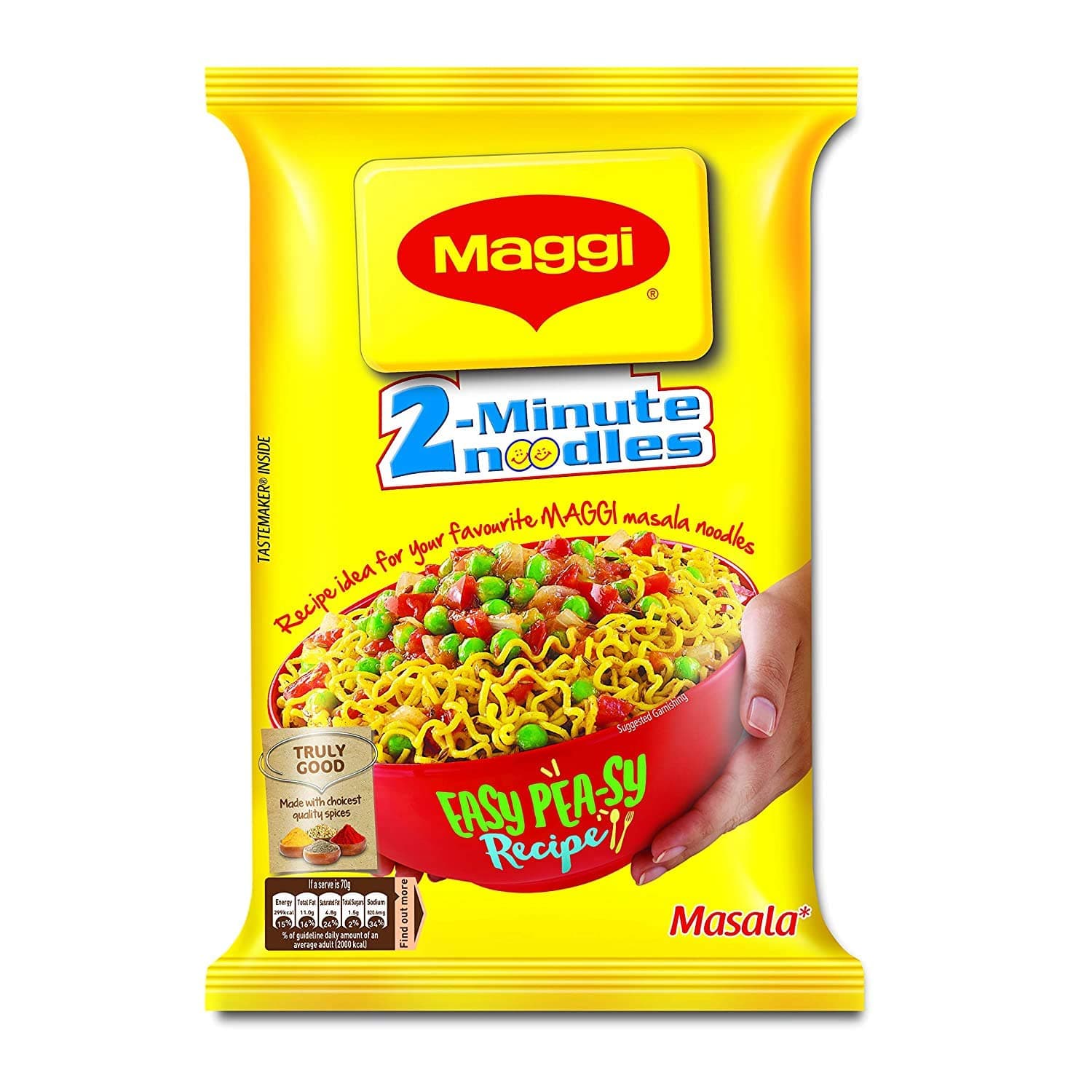
Red flags
- −Red flag: High sodium (1000mg per 100g)
- −Red flag: High saturated fat (8.2g)
- −Red flag: Refined flour (maida) base
- −Red flag: Palm oil listed
Green flags
- +Green flag: Source of protein (8.2g)
Ingredients, decoded
20 listed- Noodles: Refined Wheat Flour (Maida)
- Palm Oil
- Iodized Salt
- Wheat Gluten
- Thickeners (508, 412)
- Acidity Regulators (501(i), 500(i))
- Humectant (451(i))
- Masala Tastemaker: Mixed Spices (26.2%) (Onion, Coriander, Red Chilli, Turmeric, Garlic, Cumin, Aniseed, Ginger, Fenugreek, Black Pepper, Toasted Onion, Clove, Green Cardamom, Nutmeg)
- Hydrolysed Groundnut Protein
- Refined Wheat Flour (Maida)
- Sugar
- Starch
- Palm Oil
- Iodized Salt
- Thickener (508)
- Acidity Regulator (330)
- Flavour Enhancer (635)
- Colour (150d)
- Mineral
- Wheat Gluten
[F] CC4
Our take
CleanPlate reviewIndia's favourite two minutes, read slowly
Few packaged foods are as woven into Indian life as Maggi. It is the hostel dinner, the rainy day snack and the first thing many of us learned to cook. That familiarity is exactly why it deserves a careful read rather than a quick verdict.
CleanPlate scores it [F]CC4. The C for nutrition depends on added iron; without it the noodles would be a D, hence the [F]. The C for ingredients reflects a maida and palm oil base with a humectant, a flavour enhancer and caramel colour. The 4 for risk comes from sodium: at 1000 mg per 100 g, sodium alone caps the grade.
Claims vs reality
What the pack says, checked against the ingredient list and nutrition panel.
- Product nameHolds
“Masala”
Mixed spices are 26.2% of the tastemaker, helped along by flavour enhancer 635.
- On the packHolds
“Goodness of iron”
6.9 mg iron per 100 g, from added minerals. A 70 g serve gives 16% of the daily iron requirement, as the pack says.
How CC4 breaks down
Each grade is scored on its own. Here are the label numbers behind each one, per 100 g.
Adequate nutrient density
- Protein
- 8.2 g
- Fibre
- Not declared
- Vitamins and minerals
- Iron
- Energy
- 384 kcal
Scored on eight nutrients (protein, fibre, calcium, iron, vitamins A, C, D and zinc), per 100 g and per 100 kcal.
Mixed processing and additives
- Base
- Noodles: Refined Wheat Flour
- Main fat
- Palm Oil
- Sweeteners
- Sugar
- Additives
- 6
- Flagged
- 3 ingredients
Scored on six things: base processing, fat quality, sweeteners, additives, colours and flavours.
High risk
- Added sugar
- 1.1 g
- Sodium
- 1000 mg
- Saturated fat
- 8.2 g
- Trans fat
- 0.13 g
Scored on added sugar, sodium and saturated fat, with a penalty for trans fat.
[F] Added vitamins or minerals meaningfully lift this product's nutrition grade. Without them it would score lower.
A closer look
Does the label add up?
The noodles are refined wheat flour (maida), palm oil, iodised salt and wheat gluten, with thickeners (508, 412), acidity regulators (501, 500) and a humectant (451). The tastemaker is mixed spices (26.2%), hydrolysed groundnut protein, maida, sugar, starch, palm oil, salt, a thickener, citric acid, flavour enhancer 635, caramel colour (150d), minerals and gluten.
Per 100 g: 384 kcal, 12.5 g fat of which 8.2 g saturated, 1000 mg sodium, 1.1 g added sugar, 8.2 g protein and 6.9 mg iron. The front of the pack carries a daily guideline panel per serve, which is where the sodium figure is easiest to spot.
Ingredients to watch
- Sodium (from salt and the tastemaker)Concern
1000 mg per 100 g. The taste of Maggi is largely the taste of salt, and most of it arrives in one sitting. This matters most for anyone watching blood pressure.
- Refined wheat flour (maida)Worth watching
The first ingredient and the base of the noodle cake. Low in fibre and quick to digest, which is why a pack rarely keeps you full for long.
- Palm oilWorth watching
The noodles are pre-fried in palm oil, which is why 8.2 g of the 12.5 g fat per 100 g is saturated.
- Flavour enhancer (635)Fine
Disodium ribonucleotides, not MSG. Not a concern at food levels; its sodium adds a little to the total.
Common misconceptions
Myth: "MSG is what makes Maggi unhealthy"
The current masala tastemaker uses enhancer 635, not MSG, and neither is the real issue. The 1000 mg of sodium per 100 g comes mostly from salt.
Myth: "Adding vegetables makes it a healthy meal"
Vegetables genuinely help: more fibre, more micronutrients, more fullness. They do not change the sodium in the tastemaker or the refined flour base. Think of them as an upgrade, not a fix.
Myth: "It is fortified, so it is good for kids"
The added iron is real and useful. It sits alongside a salt load that is large for a small child. Fortification makes Maggi better than it would otherwise be, not a daily children's food.
How often, and how
- Healthy adultsOccasionally, with half the tastemaker and a protein on the side
- ChildrenA treat, not a regular tiffin item
- High blood pressureRarely, and never with the full tastemaker
A bowl of Maggi now and then is not a health crisis. The pattern matters more than the plate: two or three packs a week adds up to a lot of sodium with little fibre or protein in return.
Smarter ways to eat it
Half the tastemaker, all the flavour
Use half the sachet and add your own onion, tomato, chilli and a squeeze of lemon. You keep the taste you love and cut the sodium by a large share.
Make it a meal
Stir in a beaten egg, crumbled paneer or a handful of boiled chana and plenty of vegetables. Protein and fibre turn a quick snack into something that actually keeps you full.
Common questions
Is Maggi 2-Minute Masala Instant Noodles healthy?
Maggi 2-Minute Masala Instant Noodles scores CC4 (Fair) on CleanPlate, which makes it an occasional-use product, where the concerns start to outweigh the positives. The main concerns are: High sodium (1000mg per 100g); High saturated fat (8.2g); Refined flour (maida) base; Palm oil listed. On the plus side: Source of protein (8.2g).
What does the CC4 score mean?
The first letter (C) grades nutritional value: adequate nutrient density. The second letter (C) grades ingredient and label integrity: mixed processing and additives. The number (4) grades risk nutrients (sugar, sodium, saturated fat): high risk. The [F] means added vitamins or minerals meaningfully lift the nutrition grade.
Which ingredients in Maggi 2-Minute Masala Instant Noodles should I watch?
Noodles: Refined Wheat Flour (Maida) (Maida), Palm Oil (Palm oil), Refined Wheat Flour (Maida) (Maida), Palm Oil (Palm oil), Colour (150d) (Caramel Colour (Class IV)).
Last reviewed September 28, 2026. Scored with the CleanPlate method from the published label.
Better Instant Noodles
All 89 →- BA3Slurrp Farm Classic Masala Millet Hakka Noodles
- −Red flag: High sodium (531.2mg per 100ml)
- −Red flag: Contains Maltodextrin
Good - CA2Slurrp Farm Mild Masala Millet Hakka Noodles
- −Red flag: Contains Maltodextrin
- +Green flag: Source of protein (9.3g)
Good - CA2Slurrp Farm Mild Masala Millet Noodles
- +Green flag: Source of protein (10.6g)
- +Green flag: High fibre (10.5g)
Good - CA3Cheffin Miso Ramen Flavoured Instant Noodles Kit
- −Red flag: High sodium (817.4mg per 100g)
Good